Coastal heat and tidal humidity create aggressive colonies along exterior eaves, double-piazza ceilings, and shaded rafter tails. In neighborhoods like the Old Village and I'On, red paper wasps exploit ornamental trim…
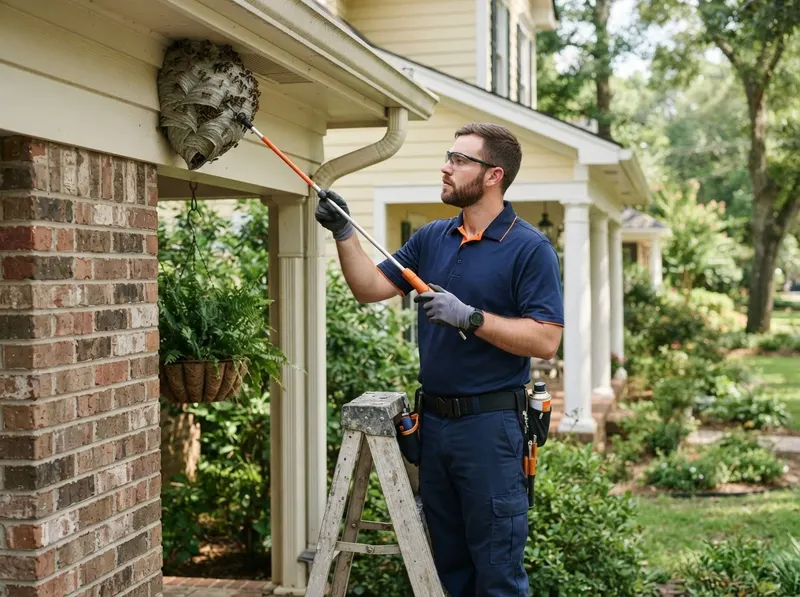
Coastal heat and tidal humidity create aggressive colonies along exterior eaves, double-piazza ceilings, and shaded rafter tails. In neighborhoods like the Old Village and I'On, red paper wasps exploit ornamental trim and historic roof overhangs, constructing open-comb papery nests that multiply rapidly from April through October. Meanwhile, ground-nesting yellowjackets settle along the sandy pine edges and irrigation beds of Park West and Dune West, presenting severe sting hazards to children and pets traversing outdoor spaces. Standard retail sprays broadly disperse volatile solvents that run off into adjacent waterways like Shem Creek and Wando River marshes, failing to eliminate the reproducing queen buried deep within structural voids.
Professional removal requires species-specific isolation to avoid scattering aggressive guard insects. For aerial bald-faced hornets hanging 20 feet up in live oaks or soffits in Carolina Park and RiverTowne, technicians apply micro-encapsulated formulations directly into the primary nest entrance before sealing and physically cutting the comb down. Ground colonies in Snee Farm and Brickyard Plantation require pressurized root-zone applications that penetrate 12 to 18 inches down without churning the surrounding turf. If an unmonitored hive is embedded inside an attic louver or brick weep-hole, structural void foaming neutralizes the interior brood chamber, whereas exterior exposed eaves receive direct mechanical detachment and spot residuals.
Decision-fit guidance depends on the colony's nest architecture and structural proximity. Homeowners with visible mud dauber tubes or single paper wasp combs under porch trim benefit from localized precision treatments that avoid broad chemical drift. Conversely, concealed yellowjacket nests behind HardiePlank siding or beneath raised foundation piers in Belle Hall necessitate non-repellent interior void transfers; rushing to caulk the entry hole simply forces disoriented stinging wasps through drywall electrical outlets into living rooms. Every service call concludes with specialized insecticidal dusting of the anchoring footprint to prevent new foundress queens from re-establishing nests on the exact same rafter during the subsequent Lowcountry breeding cycle.
Every job gets a firm, written price after a free on-site visit.
Tell us about your stinging insect & wasp removal job in Mount Pleasant and we'll send a clear, written quote, usually the same day.
 Harbor Pine Pest Control