Coastal environments present sustained pest pressures. In neighborhoods like Dune West, Carolina Park, and RiverTowne, warm humidity and sandy soils create uninterrupted breeding environments for fleas and ticks from…
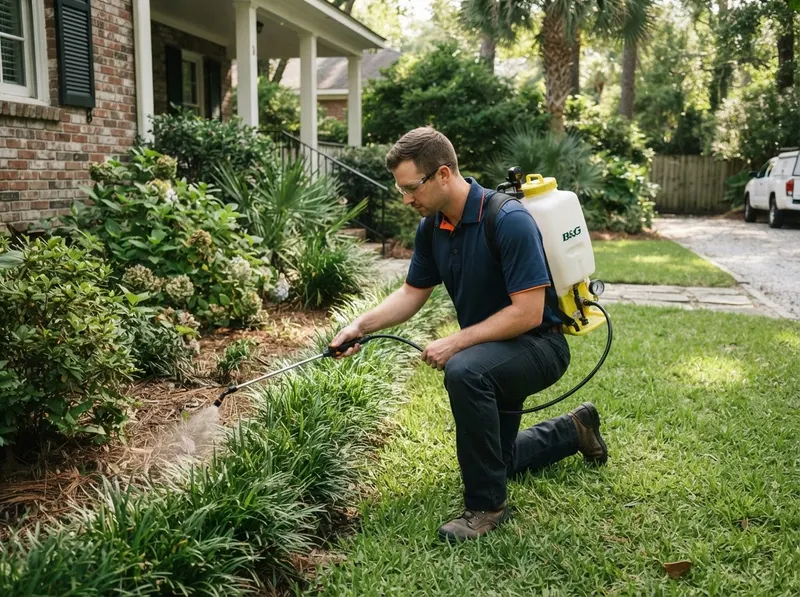
Coastal environments present sustained pest pressures. In neighborhoods like Dune West, Carolina Park, and RiverTowne, warm humidity and sandy soils create uninterrupted breeding environments for fleas and ticks from March through November. Properties backing up to tidal creeks or wooded preservation corridors frequently harbor wildlife hosts like white-tailed deer, raccoons, and marsh rabbits that deposit parasites into residential turf. Flea & tick yard protection addresses these vectors directly by treating transition zones, the borders where manicured turf meets live oak canopies, palmetto beds, and ornamental mulches. This perimeter approach forms a defensive barrier that stops ticks before they migrate to patio pavers, screened porches, or domestic pets.
Executing this protocol requires deliberate product selection suited to Charleston County's watershed. While conventional agricultural sprays run the risk of washing away in sudden afternoon downpours, specialized polymer-encapsulated suspensions adhere firmly to pine straw and ground cover. Homes in historic Old Village, I'On, or Snee Farm often feature enclosed courtyards and active family yards requiring targeted application rather than broad chemical saturations. Technicians evaluate crawl space perimeters, deck undersides, and turf-line transitions, delivering calibrated treatments that break the flea life cycle at the larval and pupal stages.
Selecting standalone exterior treatment works best when indoor living spaces remain clear of current activity. If indoor scratching or flea dirt is already visible on domestic animals, property owners achieve better eradication by combining outdoor ground barrier treatments with indoor mechanical vacuuming and veterinarian-prescribed oral pet care. The practical trade-off centers on canopy shade versus sunlight exposure: dense, shaded lawns in Brickyard Plantation and Belle Hall retain moisture that shields pupae, necessitating scheduled 30- to 45-day retreatments during peak summer heat, whereas open, sun-baked turf dries quickly and demands fewer cumulative applications.
Every job gets a firm, written price after a free on-site visit.
Tell us about your flea & tick yard protection job in Mount Pleasant and we'll send a clear, written quote, usually the same day.
 Harbor Pine Pest Control