Crawlspace pest & moisture defense establishes an environmental barrier across the foundation footprint of coastal homes. Elevated foundations across the Old Village, RiverTowne, and I'On frequently sit over…
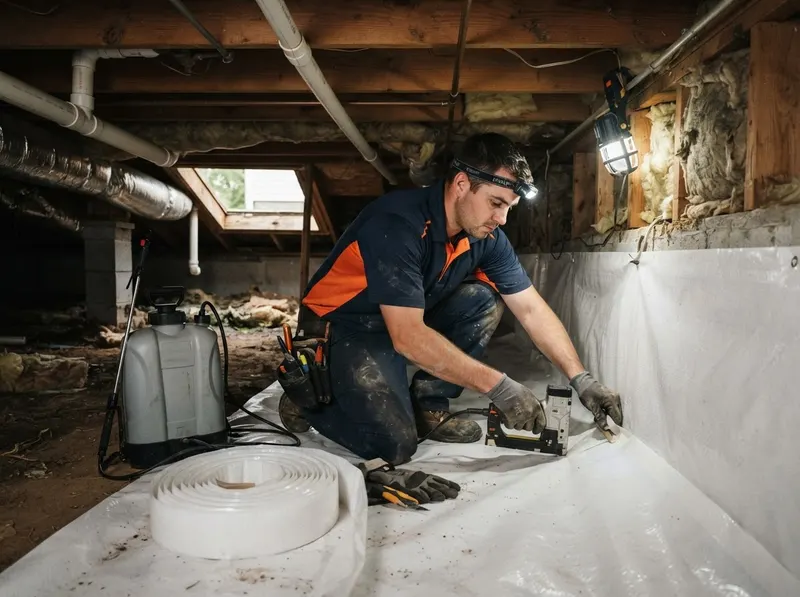
Crawlspace pest & moisture defense establishes an environmental barrier across the foundation footprint of coastal homes. Elevated foundations across the Old Village, RiverTowne, and I'On frequently sit over marsh-adjacent soils that register subfloor wood moisture levels above 18 percent during summer months. Sustained relative humidity over 70 percent inside unsealed crawlspaces creates an ideal habitat for subterranean termites and wood-boring beetles, while drawing marsh rats looking for shelter above the high-tide line. Applying a 10 to 12-mil reinforced polyethylene vapor barrier directly over exposed earth stops ground-evaporated moisture, which lowers subfloor humidity and disrupts the breeding cycle of moisture-seeking insects without saturating living spaces with harsh synthetic chemicals.
Decision guidance depends on current structural conditions and foundation vent designs. If a subfloor maintains moisture readings consistently below 15 percent with intact foundation screens, a perimeter exclusion barrier paired with localized borate timber misting resolves isolated insect activity. If foundation timbers show active fungal bloom, buckled hardwood flooring along first-floor living rooms, or persistent camel cricket nesting, full crawlspace encapsulation with commercial-grade dehumidification becomes necessary. The operational trade-off centers on upfront system scope versus long-term mechanical maintenance: closed encapsulation systems require dedicated 15-amp electrical circuits and annual filter servicing, whereas ground vapor barriers require lower initial investment but rely on unobstructed exterior foundation airflow through existing brick piers.
Step 1 involves an on-site structural audit measuring wood moisture equivalent percentages at three separate subfloor joist locations using pin-type moisture meters. Step 2 clears degraded organic debris, installs sealed polyethylene ground sheeting, and repairs damaged foundation vent wire mesh across exterior perimeters in communities like Belle Hall, Dune West, and Brickyard Plantation. Step 3 places non-volatile, mineral-derived pest barriers around foundation footings and applies localized spot treatments to vulnerable sill plates. Homeowners receive an exact written quote following the physical inspection, eliminating surprise add-on fees or vague arrival intervals.
Every job gets a firm, written price after a free on-site visit.
Tell us about your crawlspace pest & moisture defense job in Mount Pleasant and we'll send a clear, written quote, usually the same day.
 Harbor Pine Pest Control